
Uncategorized

Interview : Julie Derron

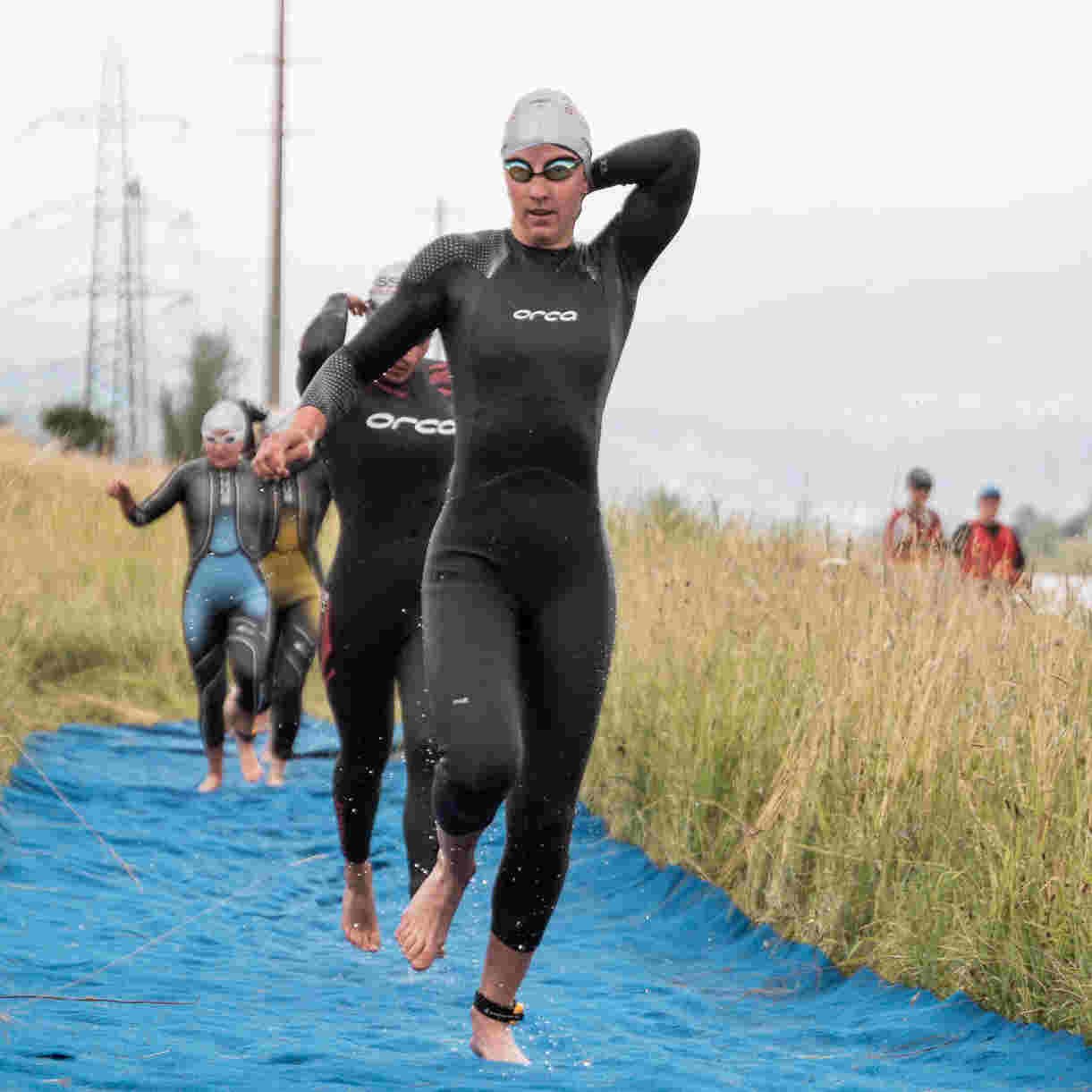
(c) Max Studer

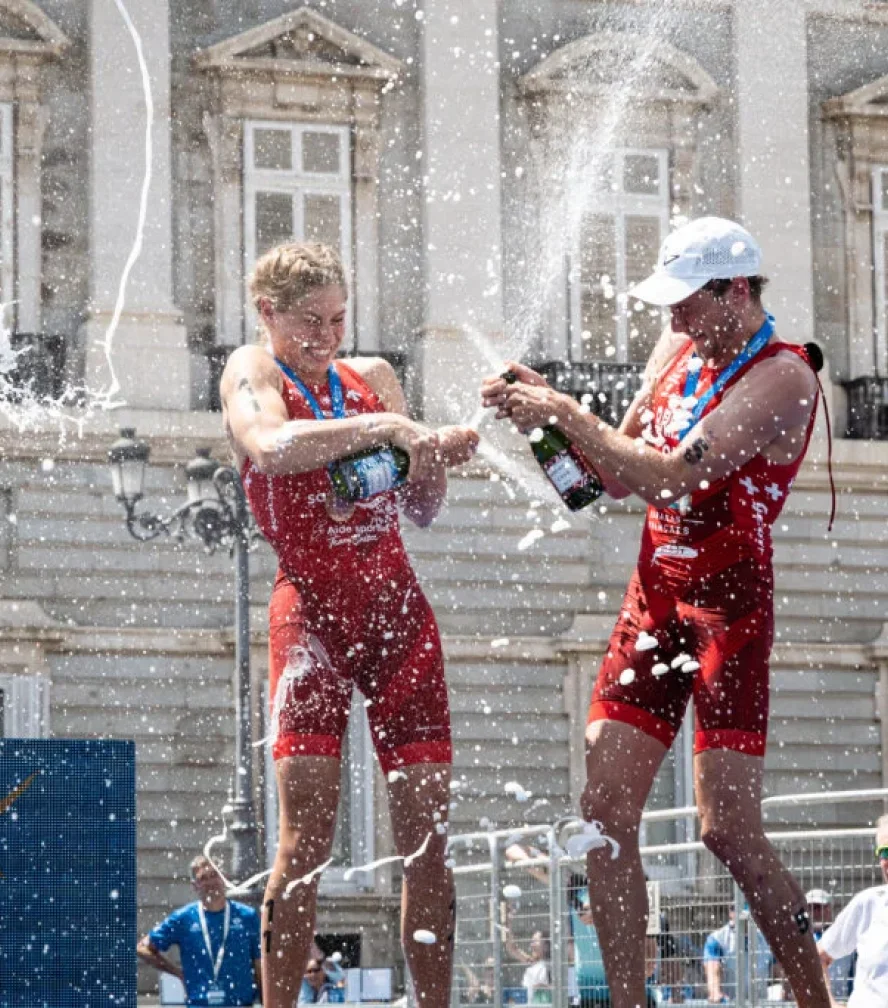
With an eighth-place finish in the Paris pre-Olympic triathlon, Julie Derron has confirmed her participation in the 2024 Olympic Games.  A remarkable performance for the Zurich triathlete, who is already the 2021 European champion in Valencia and has been swimming with an Orca wetsuit since the start of the year. Despite her busy schedule, Julie was kind enough to answer a few questions at the beginning of August.

Julie, can you introduce yourself in a few words?

My name is Julie Derron, I’m 26 years old and I’m from Zurich. I’m a professional triathlete and mainly race short distance, although I do compete in the half Ironman every now and then. In 2021 I became European champion over the Olympic distance and my next big goal is to participate in the Olympic Games in Paris in one year. I also completed my Master’s degree in Food Process Engineering at ETH this spring.

You started triathlon very young. How did you discover this sport?

When I was younger, there was also an Ironkids race as part of Ironman Switzerland in Zurich. My sisters had already competed the year before, so I wanted to emulate them and did my first triathlon when I was about six. Back then, it was mostly about doing the same as my sisters and winning a cool prize. Triathlon was always a cool experience with the whole family.

You’ve been doing triathlon at international level for over 10 years, with demanding training. How do you manage to find the necessary motivation for training?

Sport and triathlon in particular is a lot of fun for me. I am an exercise person and feel very happy after doing sport. I also have high goals and know that doing a lot of training brings me one step closer to my goals. It also helps to have a good training environment like I have here in St. Moritz with my group around coach Brett Sutton.

Can you give an example of the daily routine of a professional triathlete?

Since we have to balance three disciplines, every day looks a little different. For example, a normal Monday for me consists of a 90-minute swim workout at 7am, then I go home and have breakfast. Shortly before noon I start my first bike training. It’s usually hill reps to build up strength. After lunch I usually read something or answer e-mails and take a short nap. Then at around 3:30pm, a second bike workout starts, which is more focused on endurance. Afterwards I eat dinner with my sister, watch some TV and soon go to bed. The training the next day is then mostly focused on running as the main unit.

Parallel to your sporting career, you successfully completed your studies at ETH in June 2023. How did you manage to balance these two activities?

It takes good time management and discipline to balance studying and elite sport. Fortunately, I was able to make certain adjustments to my schedule at ETH and thus create more time for sport. It is exhausting, especially when competitions and exams fall on the same period, but when both succeed, the reward is all the greater. Besides, I also enjoyed studying, so it’s a little easier.

Your sister Nina is also a professional triathlete. Is that an advantage for motivation?

It helps me a lot that my sister Nina also does triathlon. We can train together and motivate each other on difficult days. But what I find even more important is that with Nina I have a reference person who experiences the same and understands me and can also advise me in many areas.

What are your next races and goals?

My next race is the Olympic Test Event in Paris [17.8 – Julie finished 8th]. After that I’ll compete in the XL Triathlon de Gérardmer (a middle-distance race), which I’ve already won twice. And on 10 September, I will compete in a World Cup race in Karlovy Vary. My big goal is to qualify for the Olympic Games in Paris in 2024.

You swim with an Orca Apex Flow. Can you give us some quick feedback on the suit?

The Apex Flow is super comfortable and makes me feel like I’m not wearing a wetsuit. Still, it gives a good water position and feels fast. The fit is snug but not constricting and the material is comfortable and doesn’t cause any abrasions. I can also take the suit off very quickly, which is very important, especially on the short distance course, where change times can be crucial.

Finally, what advice would you give to a young athlete who wants to start triathlon?

It certainly makes sense to join a triathlon club so that you can learn the basics with friends and have fun with the sport at the same time. Triathlon is a social sport and if you can travel to a race together and then share successes together it is all the more enjoyable. It also helps to have a long-term plan and not stress about achieving results immediately. If you keep at it, success will come.

(c) Swiss Triathlon
Non classifié(e)

Interview : Julie Derron

(c) Max Studer

En terminant à la huitième place du triathlon préolympique de Paris, Julie Derron a confirmé sa participation aux Jeux olympiques de 2024. Une performance remarquable pour la triathlète zurichoise, qui est déjà championne d’Europe 2021 sur courte distance à Valence et qui nage avec une combinaison Orca depuis le début de l’année. Malgré son emploi du temps chargé, Julie a bien voulu répondre à quelques questions au début du mois d’août.

Julie, peux-tu te présenter en quelques mots?

Je m’appelle Julie Derron, j’ai 26 ans et je viens de Zurich. Je suis triathlète professionnelle et je cours principalement sur la courte distance, même si je participe de temps en temps à la distance semi-Ironman. En 2021, j’ai été championne d’Europe sur la distance olympique et mon prochain grand objectif est de participer aux Jeux olympiques de Paris dans un an. De plus, j’ai terminé ce printemps mon master en génie des procédés alimentaires à l’ETH.

Tu as commencé le triathlon très jeune. Comment as-tu découvert ce sport ?

Quand j’étais plus jeune, il y avait aussi une course Ironkids dans le cadre de l’Ironman Switzerland à Zurich. Mes sœurs étaient déjà au départ l’année précédente et j’ai donc voulu les imiter et j’ai participé à mon premier triathlon à l’âge de six ans environ. A l’époque, il s’agissait surtout de faire la même chose que mes sœurs et de gagner un prix sympa. Le triathlon a toujours été une expérience cool avec toute la famille.

Tu fais du triathlon au niveau international depuis plus de 10 ans, avec un entraînement exigeant. Comment fais-tu pour trouver la motivation nécessaire pour t’entraîner ?

J’aime beaucoup le sport et le triathlon en particulier. Je suis une personne qui bouge et je me sens très heureuse après avoir fait du sport. De plus, j’ai des objectifs élevés et je sais que les nombreux entraînements me rapprochent de mes objectifs. Cela aide aussi d’avoir un bon environnement d’entraînement, comme je l’ai ici à St. Moritz avec mon groupe autour du coach Brett Sutton.

Peux-tu donner un exemple de l’emploi du temps d’une triathlète professionnelle ?

Comme nous devons concilier trois disciplines, chaque jour est un peu différent. Par exemple, un lundi normal pour moi consiste en un entraînement de natation de 90 minutes à 7 heures, puis je rentre chez moi et je prends mon petit-déjeuner. Juste avant midi, je commence mon premier entraînement de vélo. La plupart du temps, il s’agit de Hill Reps pour développer la force. Après le déjeuner, je lis généralement quelque chose ou je réponds à des e-mails et je fais une petite sieste. Ensuite, vers 15h30, un deuxième entraînement à vélo commence, qui se concentre davantage sur l’endurance. Ensuite, je mange le dîner avec ma sœur, je regarde un peu la télévision et puis je vais me coucher. L’entraînement du lendemain est alors généralement axé sur la course comme unité principale.

Parallèlement à ta carrière sportive, tu as terminé avec succès tes études à l’ETH en juin 2023. Comment as-tu réussi à concilier ces deux activités ?

Il faut une bonne gestion du temps et de la discipline pour concilier les études et le sport de haut niveau. Heureusement, j’ai pu faire certains ajustements dans mon emploi du temps à l’ETH et ainsi me dégager plus de temps pour le sport. C’est épuisant, surtout quand les compétitions et les examens tombent en même temps, mais quand on réussit les deux, la récompense est d’autant plus grande. De plus, j’ai pris du plaisir à étudier et c’est un peu plus facile.

Ta sœur Nina est également une triathlète professionnelle. Est-ce un avantage pour la motivation ?

Le fait que ma sœur Nina fasse aussi du triathlon m’aide beaucoup. Nous pouvons nous entraîner ensemble et ainsi nous motiver aussi les jours difficiles. Mais ce que je trouve encore plus important, c’est qu’avec Nina, j’ai une personne de référence qui vit la même chose que moi, qui me comprend et qui peut aussi me conseiller dans de nombreux domaines.

Quels sont tes prochaines courses et tes objectifs ?

Ma prochaine course sera l’Olympic Test Event à Paris [17 août – Julie a fini 8e]. Ensuite, je participerai au XL Triathlon de Gérardmer (une course de moyenne distance), que j’ai déjà remporté deux fois. Et le 10 septembre, je participerai à une course de Coupe du monde à Karlovy Vary. Mon grand objectif est de me qualifier pour les Jeux Olympiques de Paris en 2024.

Tu nages avec un Orca Apex Flow. Peux-tu nous donner un bref feedback sur cette combinaison ?

L’Apex Flow est super confortable et me donne l’impression de ne pas porter de néoprène. Cependant, elle donne une bonne position dans l’eau et est rapide au toucher. La coupe est ajustée mais pas serrée et le matériau est agréable et ne provoque pas d’abrasions. En outre, je peux enlever la combinaison très rapidement, ce qui est très important sur la courte distance où les temps de changement peuvent être décisifs.

Enfin, quel conseil donnerais-tu à un jeune sportif qui souhaite commencer le triathlon ?

Il est certainement judicieux de rejoindre un club de triathlon afin d’apprendre les bases avec des amis tout en s’amusant dans le sport. Le triathlon est un sport social et si l’on peut se rendre ensemble à une course et ensuite partager des succès ensemble, c’est d’autant plus agréable. Cela aide aussi d’avoir un plan à long terme et de ne pas se stresser pour obtenir des résultats immédiatement. Si tu persévères, le succès viendra.


(c) Swiss Triathlon

Unkategorisiert

Interview : Julie Derron

(c) Max Studer

Mit einem achten Platz beim vorolympischen Triathlon in Paris hat Julie Derron ihre Teilnahme an den Olympischen Spielen 2024 bestätigt. Eine bemerkenswerte Leistung für die Zürcher Triathletin, die bereits Europameisterin 2021 in Valencia ist und seit Anfang des Jahres mit einem Orca-Neoprenanzug schwimmt. Trotz ihres vollen Terminkalenders war Julie so freundlich, Anfang August ein paar Fragen zu beantworten.

Julie, kannst du dich in ein paar Worten vorstellen?

Ich heisse Julie Derron, bin 26 Jahre alt und komme aus Zürich. Ich bin Profi-Triathletin und hauptsächlich auf der Kurzdistanz unterwegs, auch wenn ich ab und zu über die Halb-Ironman Distanz starte. 2021 wurde ich Europameisterin über die Olympische Distanz und mein nächstes grosses Ziel ist die Teilnahme an den Olympischen Spielen in Paris in einem Jahr. Ausserdem habe ich diesen Frühling mein Masterstudium in Lebensmittel-Verfahrenstechnik an der ETH abgeschlossen.

Du hast sehr jung mit dem Triathlon begonnen. Wie hast du diesen Sport entdeckt?

Als ich jünger war, gab es im Rahmen des Ironman Switzerland in Zürich auch ein Ironkids Rennen. Meine Schwestern waren im Jahr zuvor bereits am Start und so wollte ich ihnen nacheifern und habe mit etwa sechs Jahren meinen ersten Triathlon absolviert. Damals ging es vor allem darum, das Gleiche wie meine Schwestern zu tun und einen coolen Preis zu gewinnen. Der Triathlon war immer ein cooles Erlebnis mit der ganzen Familie.

Du machst seit über 10 Jahren Triathlon auf internationaler Ebene, mit anspruchsvollem Training. Wie schaffst du es, die nötige Motivation für das Training zu finden?

Sport und Triathlon im Speziellen macht mir sehr viel Spass. Ich bin ein Bewegungsmensch und fühle mich sehr glücklich nachdem ich Sport gemacht habe. Ausserdem habe ich hohe Ziele und weiss, dass mich die vielen Trainings einen Schritt näher zu meinen Zielen bringen. Es hilft auch, ein gutes Trainingsumfeld zu haben, wie ich es hier in St. Moritz mit meiner Gruppe um Coach Brett Sutton habe.

Kannst du ein Beispiel für den Tagesablauf einer professionellen Triathletin geben?

Da wir drei Disziplinen unter einen Hut bringen müssen, sieht jeder Tag etwas anders aus. Ein normaler Montag für mich besteht beispielsweise aus einem 90-minütigem Schwimmtraining um 7 Uhr, dann gehe ich nach Hause und frühstücke. Kurz vor dem Mittag starte ich mein erstes Velotraining. Meist sind das Hill Reps, um Kraft aufzubauen. Nach dem Mittagessen lese ich meist etwas oder beantworte E-mails und mache ein kurzes Nickerchen. Dann um etwa 15:30 Uhr startet ein zweites Radtraining, das mehr auf die Ausdauer fokussiert ist. Danach esse ich mit meiner Schwester Abendessen, schaue etwas Fernsehen und gehe schon bald ins Bett. Das Training am nächsten Tag ist dann meistens auf das Laufen als Haupteinheit ausgelegt.

Parallel zu deiner sportlichen Karriere hast du im Juni 2023 ein Studium an der ETH erfolgreich abgeschlossen. Wie hast du es geschafft, diese beiden Aktivitäten unter einen Hut zu bringen?

Es braucht gutes Zeitmanagement und Disziplin, um ein Studium und Spitzensport unter einen Hut zu bringen. Ich konnte zum Glück gewisse Anpassungen in meinem Stundenplan an der ETH vornehmen und mir somit mehr Zeit für den Sport schaffen. Es ist anstrengend, vor allem wenn Wettkämpfe und Prüfungen auf den gleichen Zeitraum fallen, aber wenn beides gelingt ist die Belohnung umso grösser. Ausserdem hat mir auch das Studium Spass bereitet und so fällt es etwas leichter.

Deine Schwester Nina ist ebenfalls eine professionelle Triathletin. Ist das ein Vorteil für die Motivation?

Es hilft mir sehr, dass meine Schwester Nina auch Triathlon betreibt. Wir können zusammen trainieren und uns so an schwierigen Tagen auch motivieren. Was ich aber noch wichtiger finde, ist, dass ich mit Nina eine Bezugsperson habe, die das Gleiche erlebt und mich versteht und in vielen Bereichen auch beraten kann.

Was sind deine nächsten Rennen und Ziele?

Als nächstes starte ich am Olympic Test Event in Paris [17.8 Julie beendete das Rennen auf dem 8. Platz]. Danach bestreite ich den XL Triathlon de Gérardmer (ein Mitteldistanz-Rennen), welches ich schon zwei Mal gewinnen konnte. Und am 10. September bestreite ich ein Weltcup-Rennen in Karlsbad. Mein grosses Ziel ist es, mich für die Olympischen Spiele in Paris 2024 zu qualifizieren.

Du schwimmst mit einem Orca Apex Flow. Kannst du uns ein kurzes Feedback zu dem Anzug geben?

Der Apex Flow ist super bequem und gibt mir das Gefühl als hätte ich gar keinen Neopren an. Trotzdem gibt er eine gute Wasserlage und fühlt sich schnell an. Die Passform ist anliegend, aber nicht einengend und das Material ist angenehm und verursacht auch keine Schürfungen. Ausserdem kann ich den Anzug sehr schnell ausziehen, was vor allem auf der Kurzdistanz sehr wichtig ist, da dort die Wechselzeiten entscheidend sein können.

Was würdest du schließlich einem jungen Sportler raten, der mit dem Triathlon beginnen möchte?

Es ist sicher sinnvoll, einem Triathlon Club beizutreten, damit man mit Freunden die Grundlagen erlernen kann und gleichzeitig Spass am Sport haben kann. Triathlon ist ein sozialer Sport und wenn man gemeinsam an ein Rennen reisen kann und dann Erfolge gemeinsam teilen kann ist es umso schöner. Es hilft auch, einen langfristigen Plan zu haben und sich keinen Stress zu machen, sofort Ergebnisse zu erreichen. Wenn man dran bleibt, dann kommt der Erfolg.


(c) Swiss Triathlon